Make market signals scannable
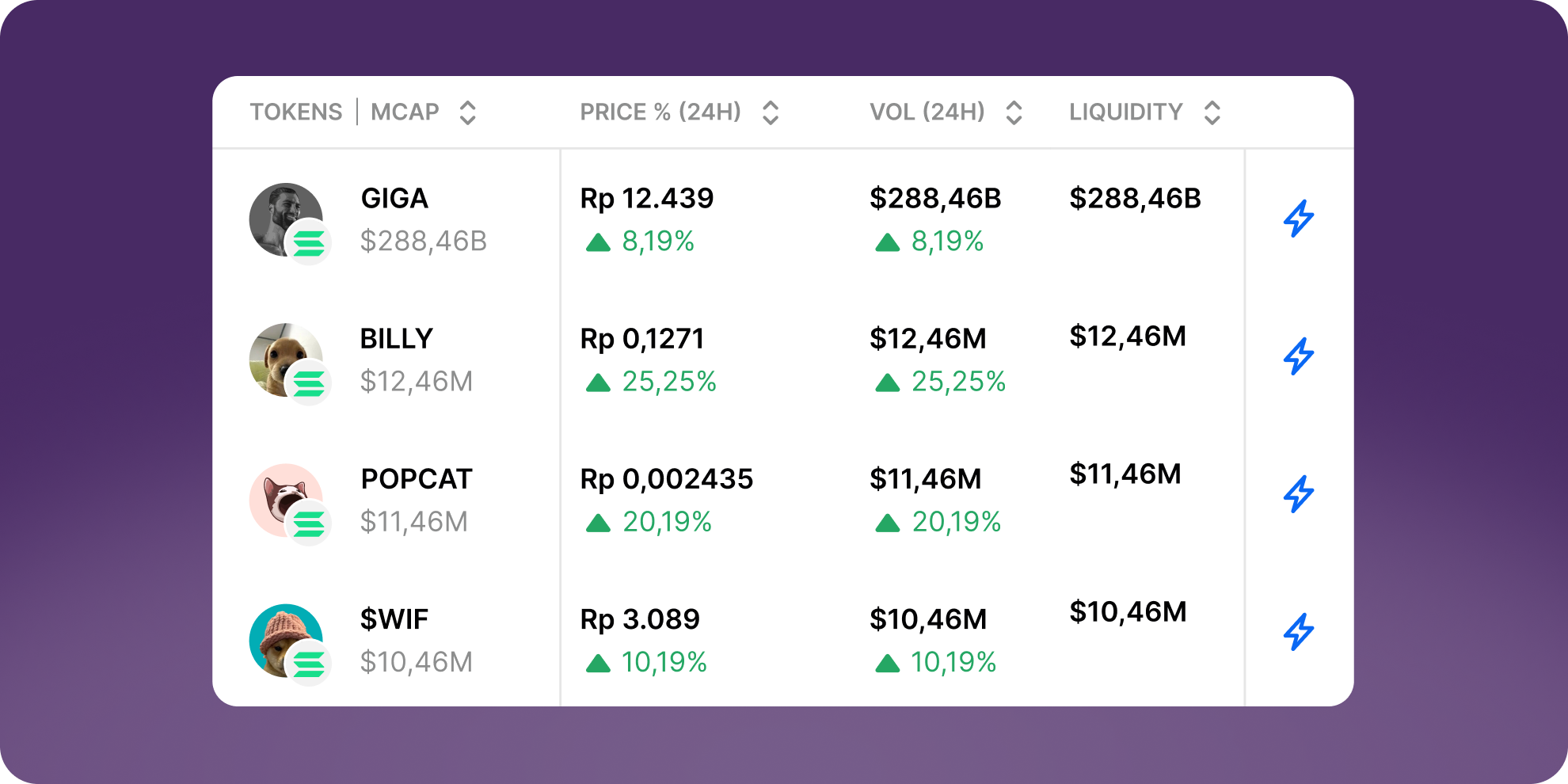
Prioritize price, volume, liquidity, and market cap instead of showing every metric.
 Dimas Aditama Fikri
All projects
Dimas Aditama Fikri
All projects
Pintu Web3 / Product Design
Overview
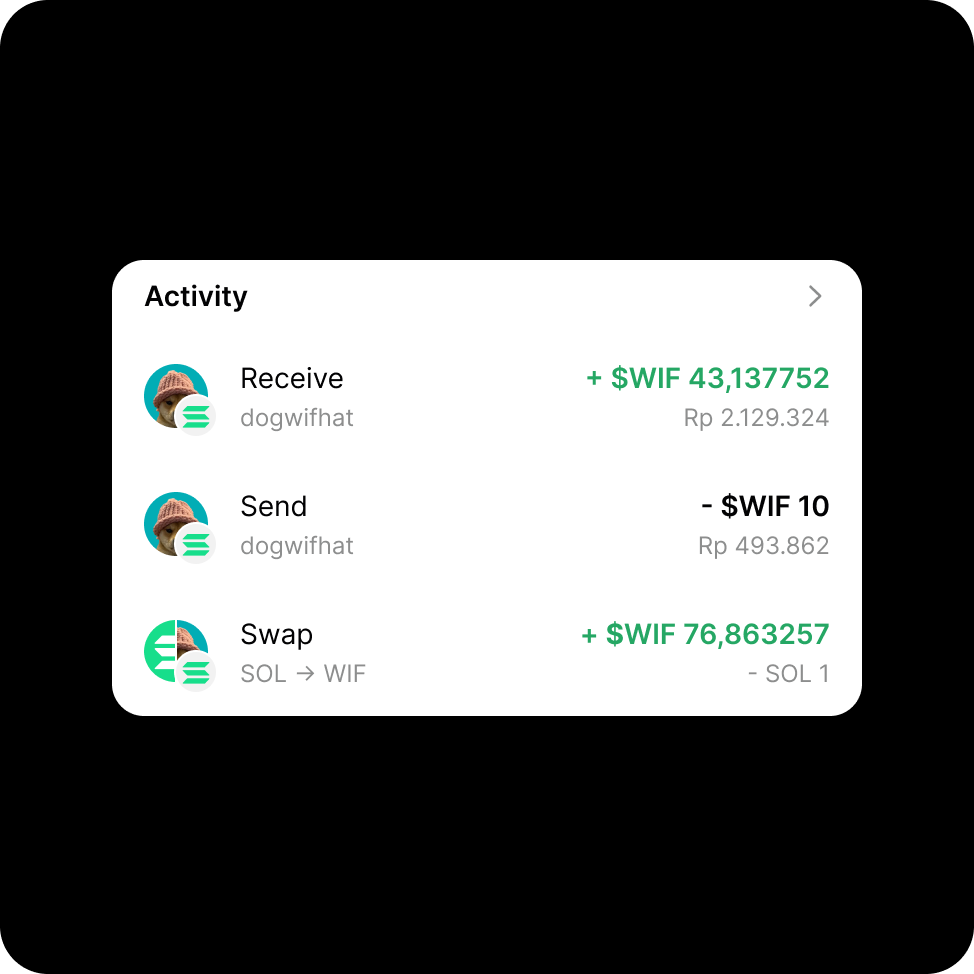
Swap was a primary revenue-generating feature, but users could only trade tokens they already knew. There was no dedicated experience for finding which assets were gaining momentum or attracting market attention.
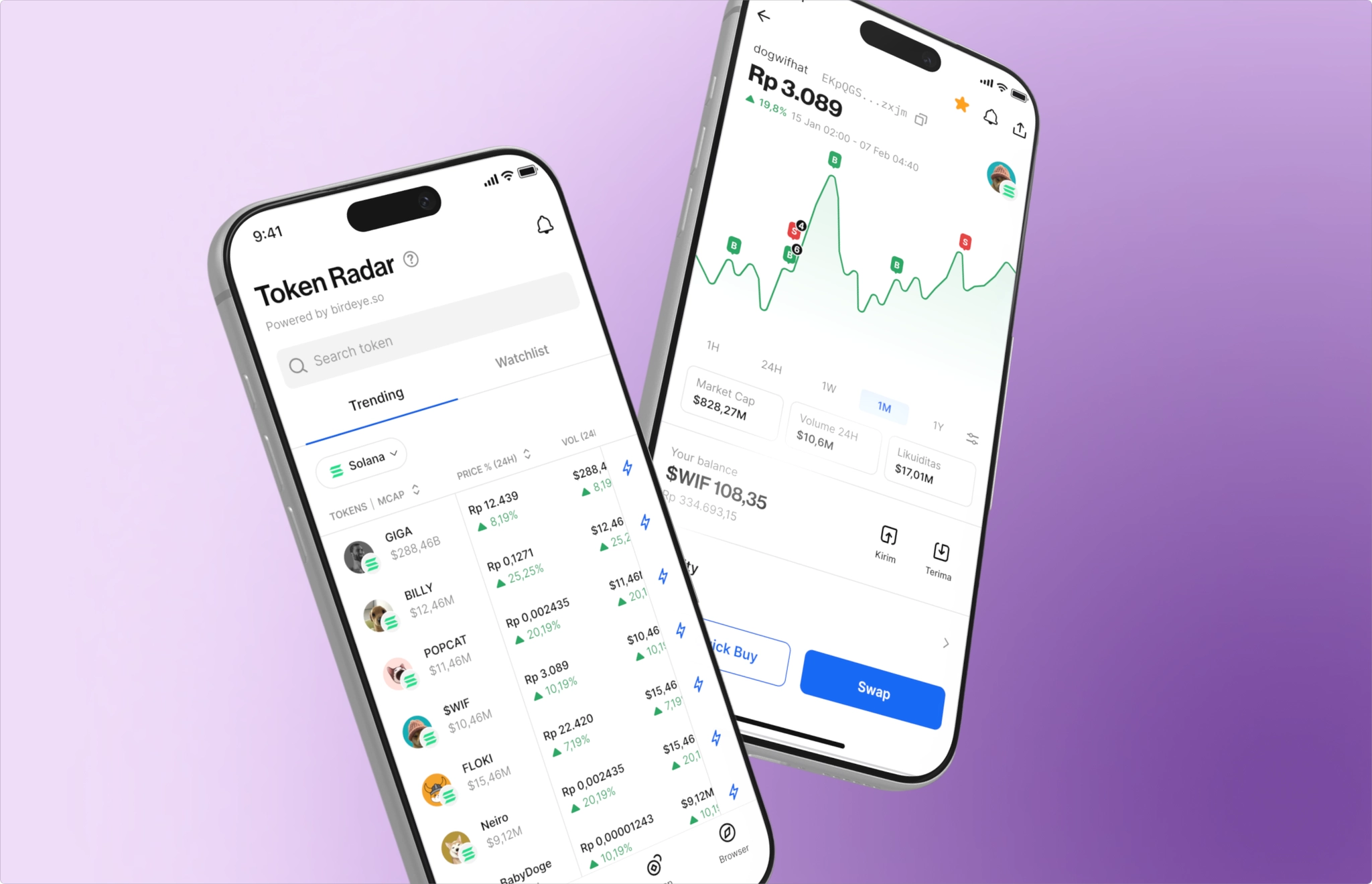
Token Radar created a direct path from discovery to evaluation to swap, helping traders uncover opportunities without leaving the Pintu ecosystem.
The problem
Pintu captured the transaction, but not the discovery phase of the trading journey.
Users had no easy way to discover trending or fast-moving tokens.
Research happened across external tools before users returned to swap.
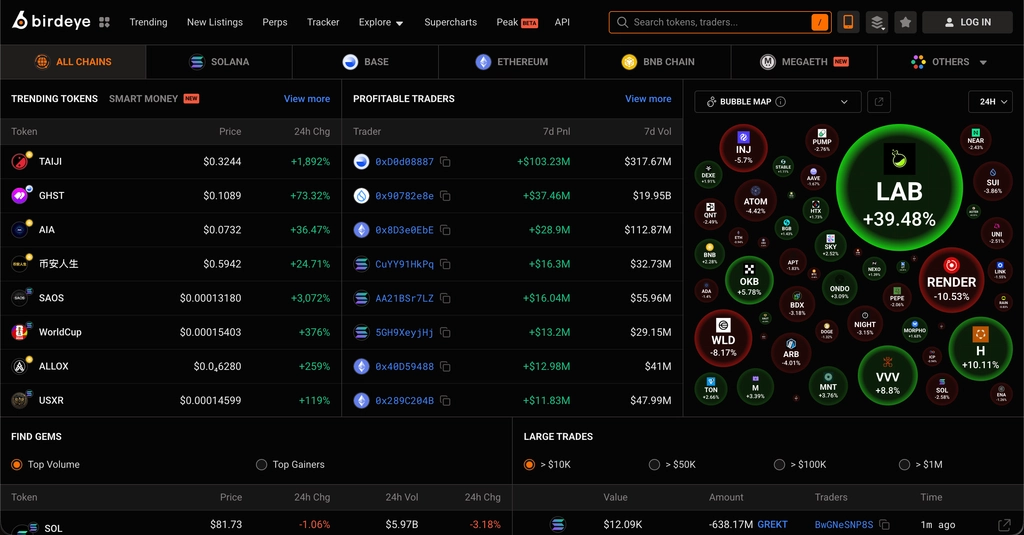
Benchmark
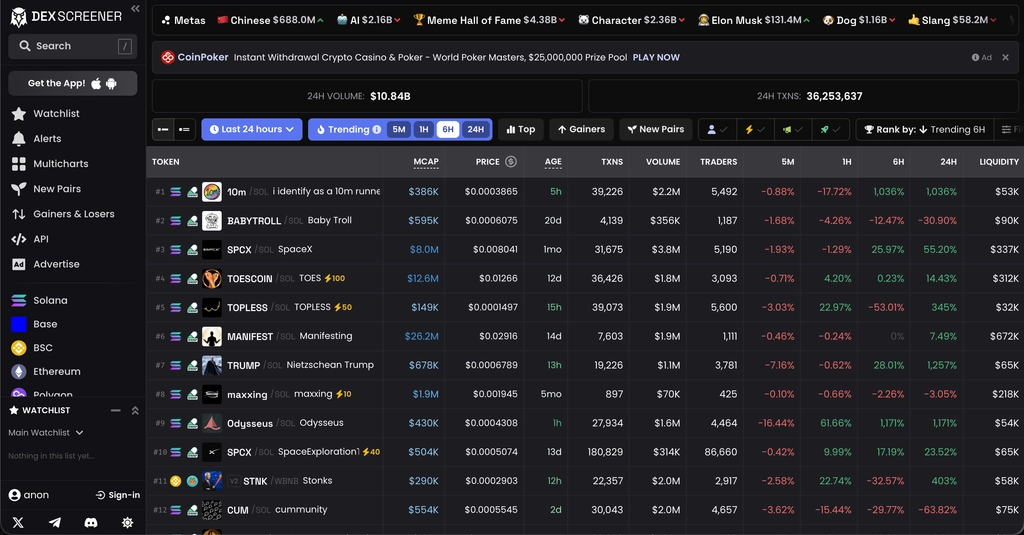
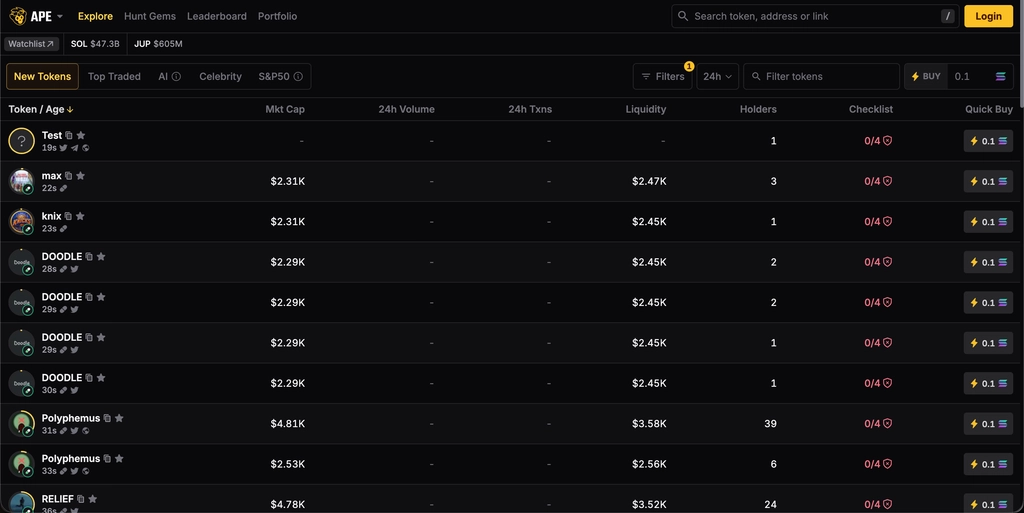
Discovery tools surfaced deep market data but often overwhelmed users. Trading products made execution easy, yet rarely helped people find the opportunity first.
Design principles
Prioritize price, volume, liquidity, and market cap instead of showing every metric.
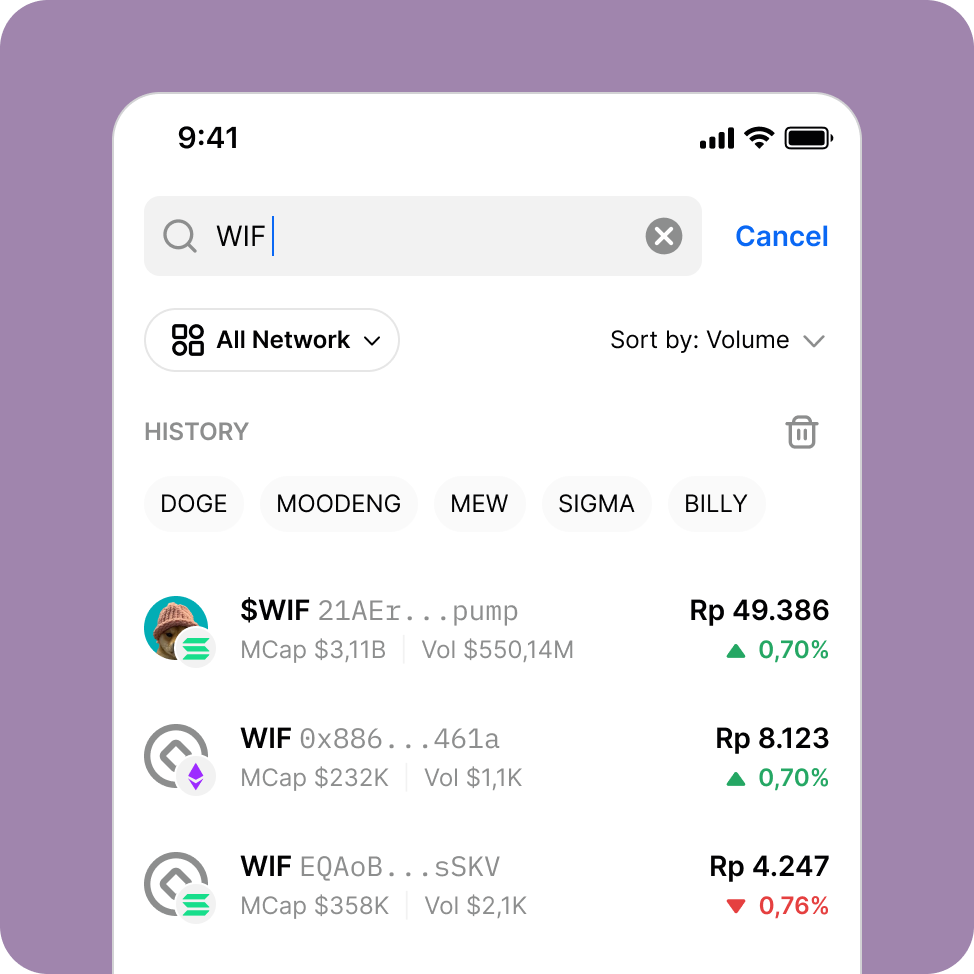
Handle both token-name queries and contract addresses shared on social platforms.
Connect discovery and evaluation directly to Swap within the same product journey.
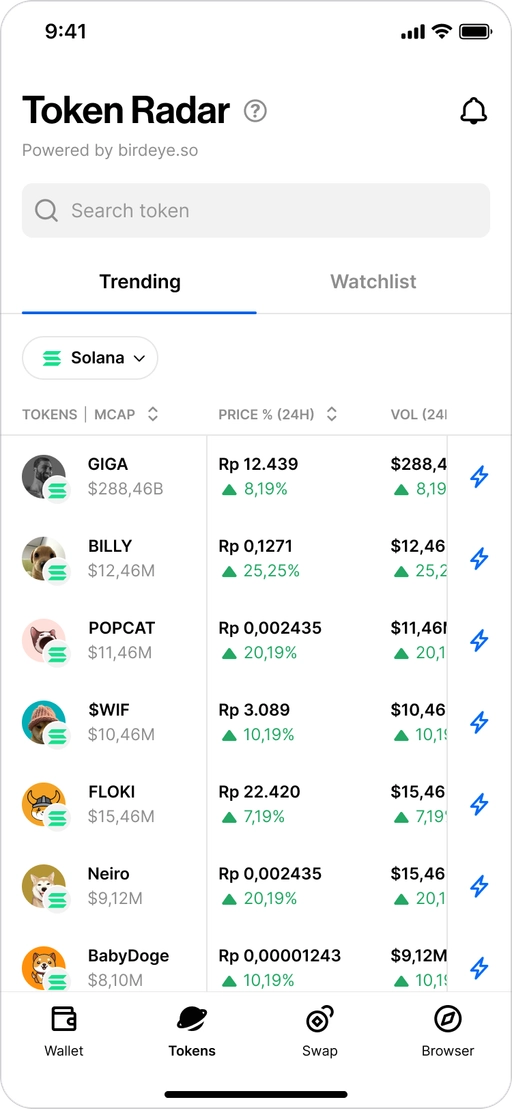
01 / Simplified discovery
Compact rows keep more tokens visible while surfacing the metrics traders use to identify unusual activity. Trending and Watchlist separate exploration from tracking.
02 / Flexible search
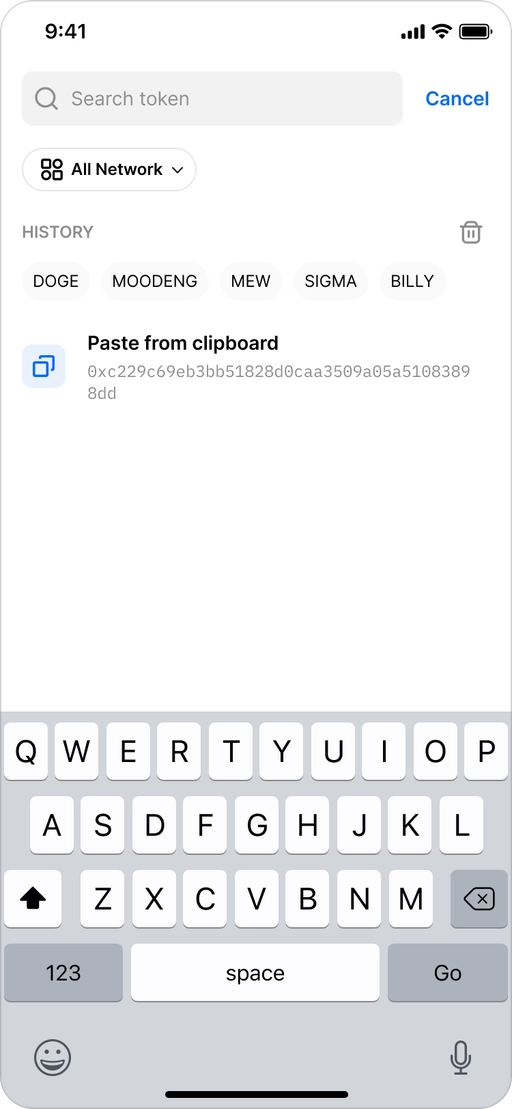
Recent searches and one-tap clipboard paste support how traders move between tools.
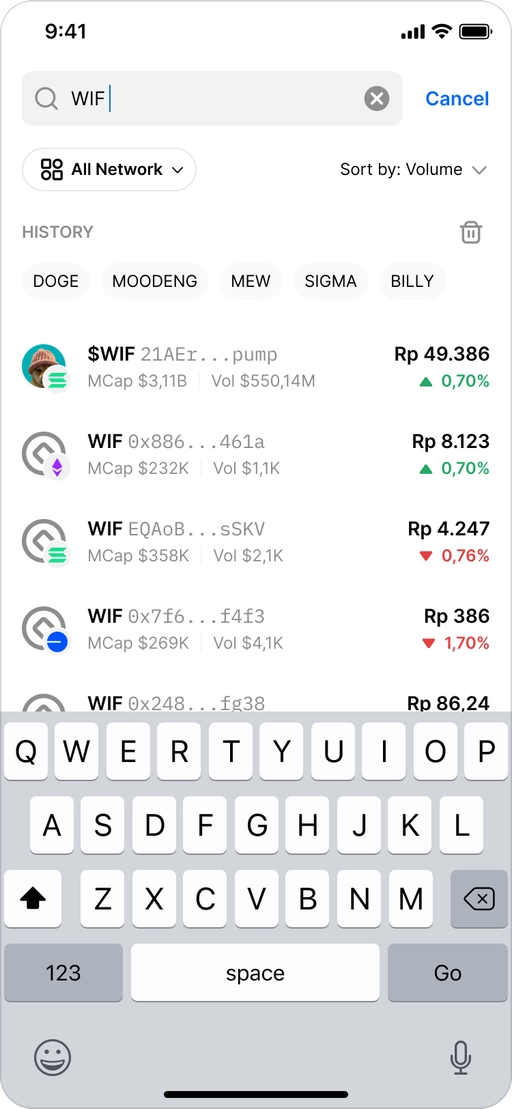
Market cap, volume, and network help distinguish tokens with similar tickers.
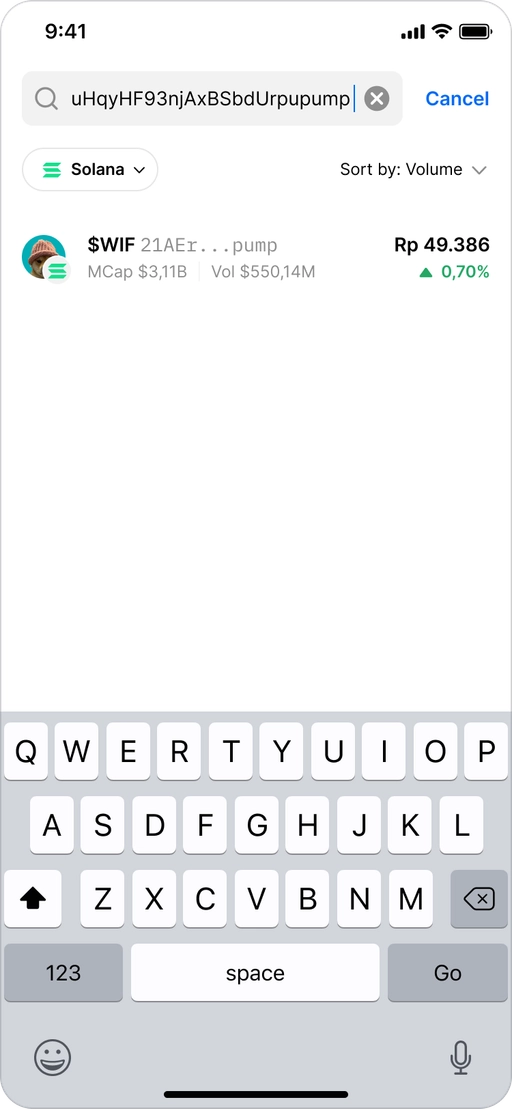
A unique match returns the token immediately and keeps the path to action short.
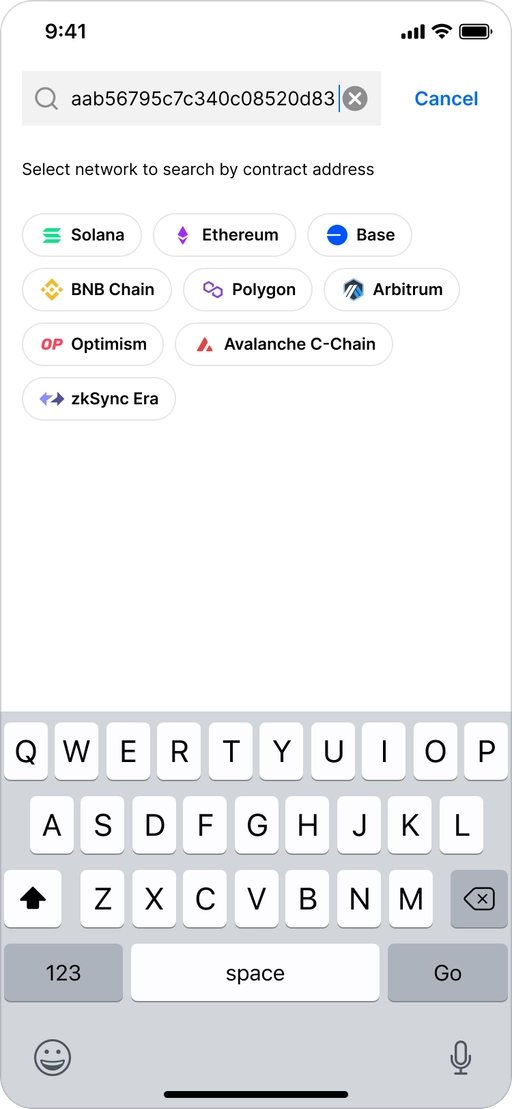
Network selection appears only when the pasted address cannot be identified confidently.
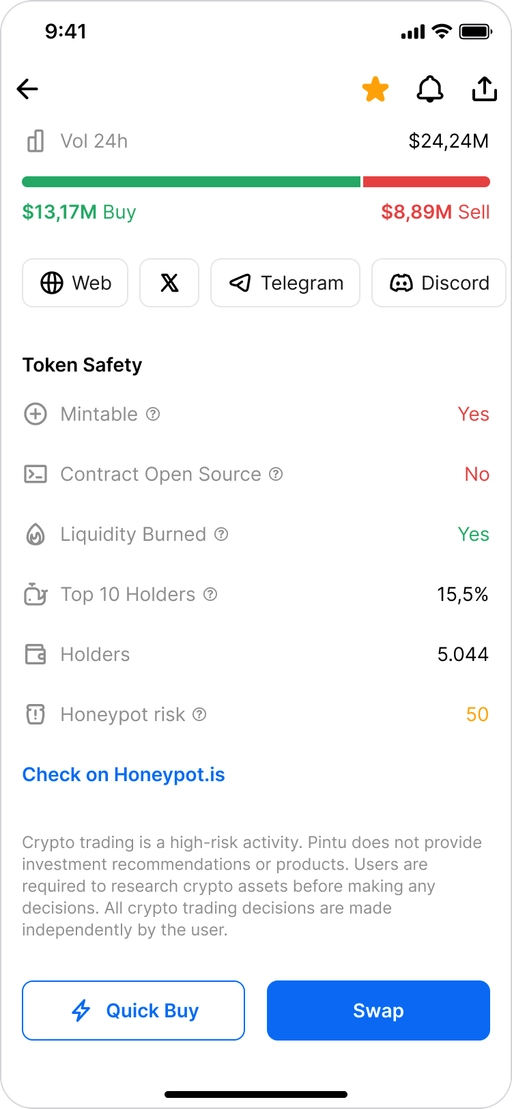
03 / Token detail
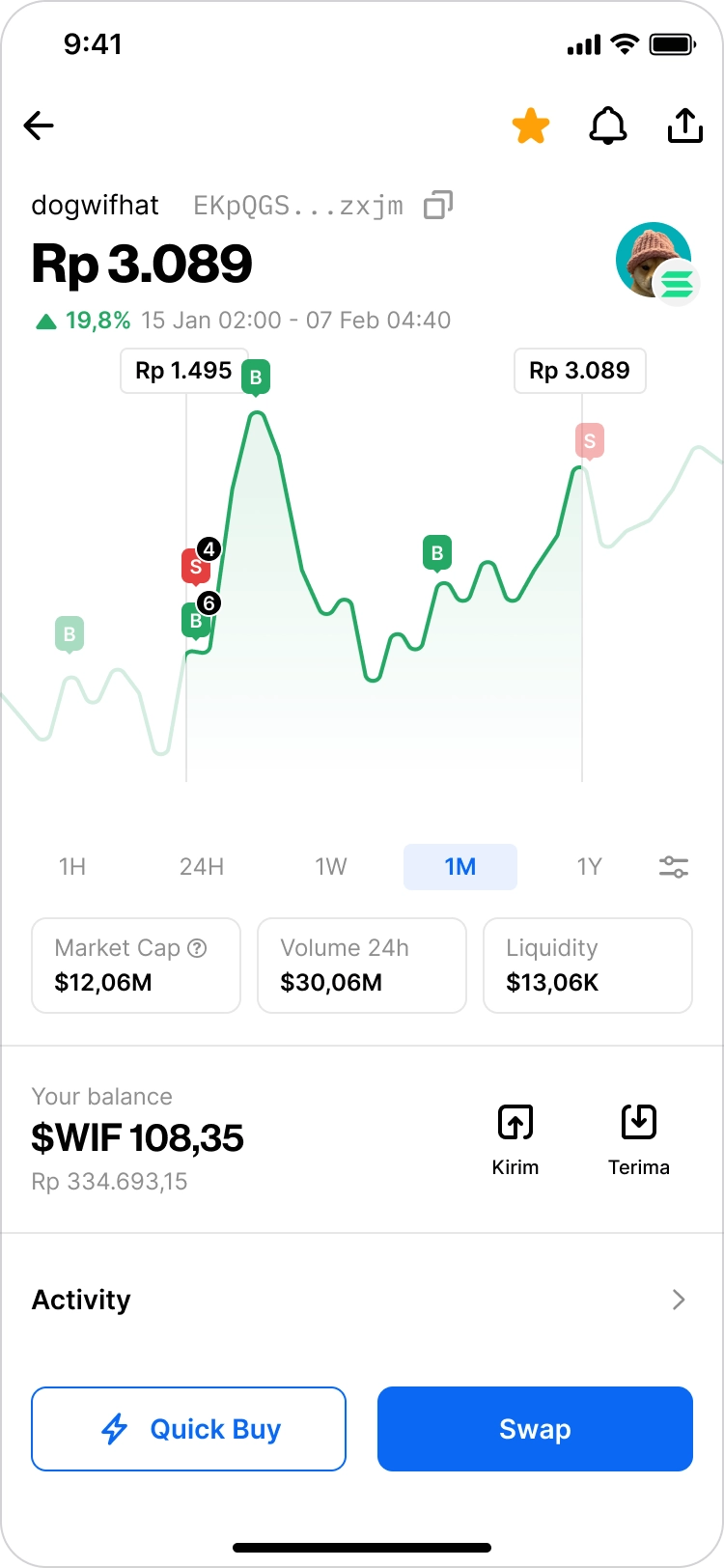
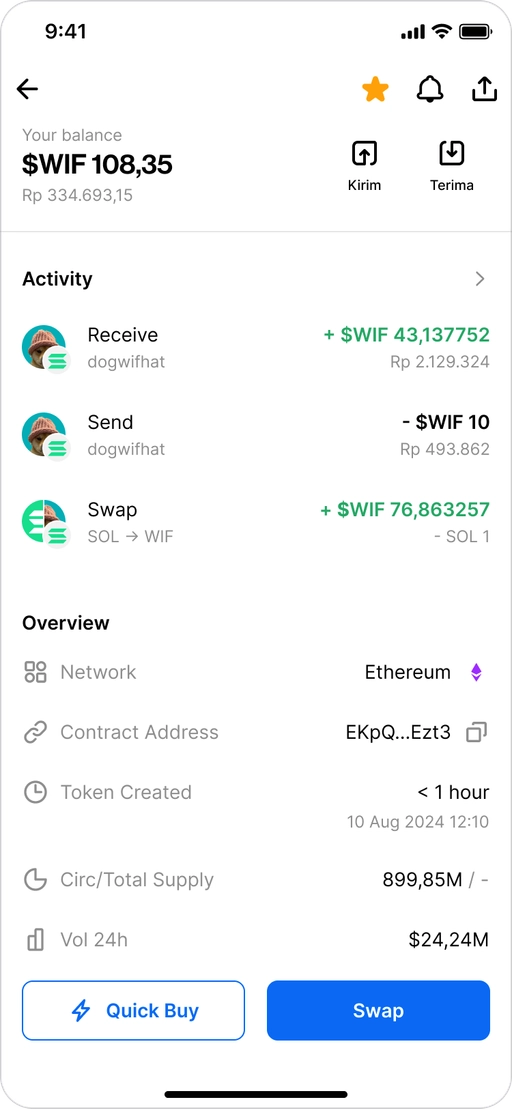
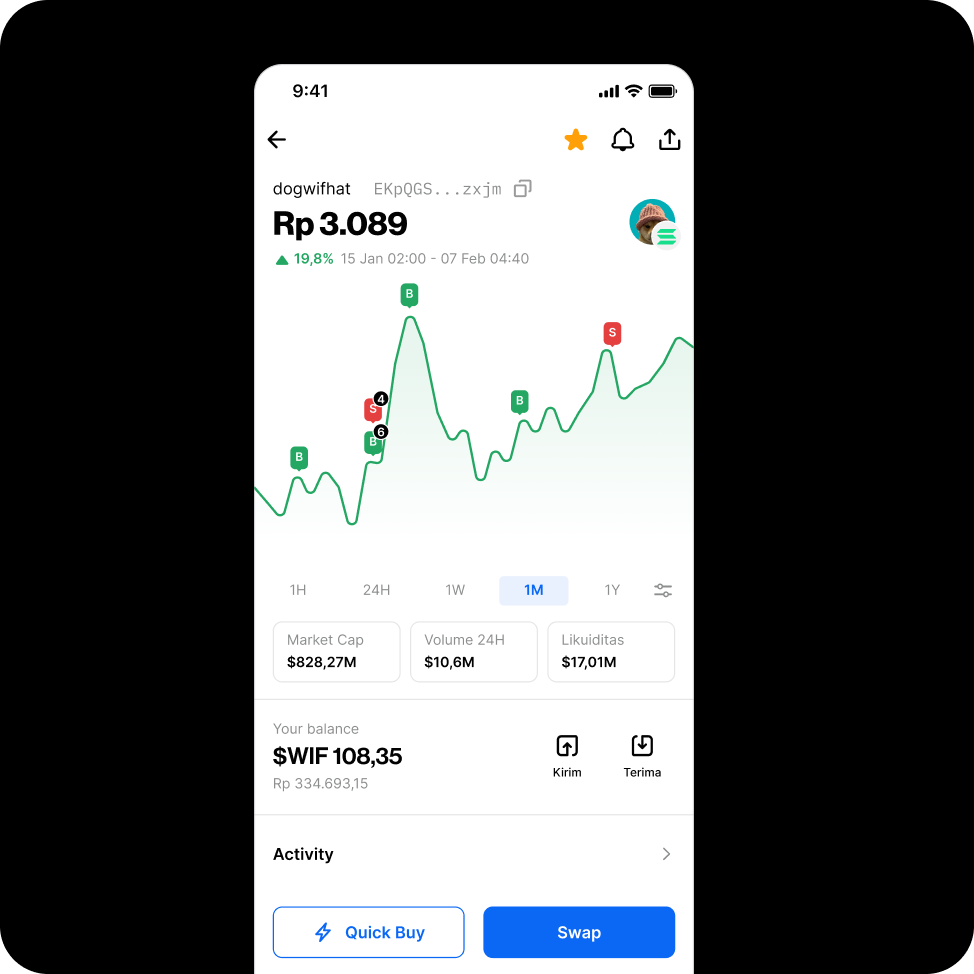
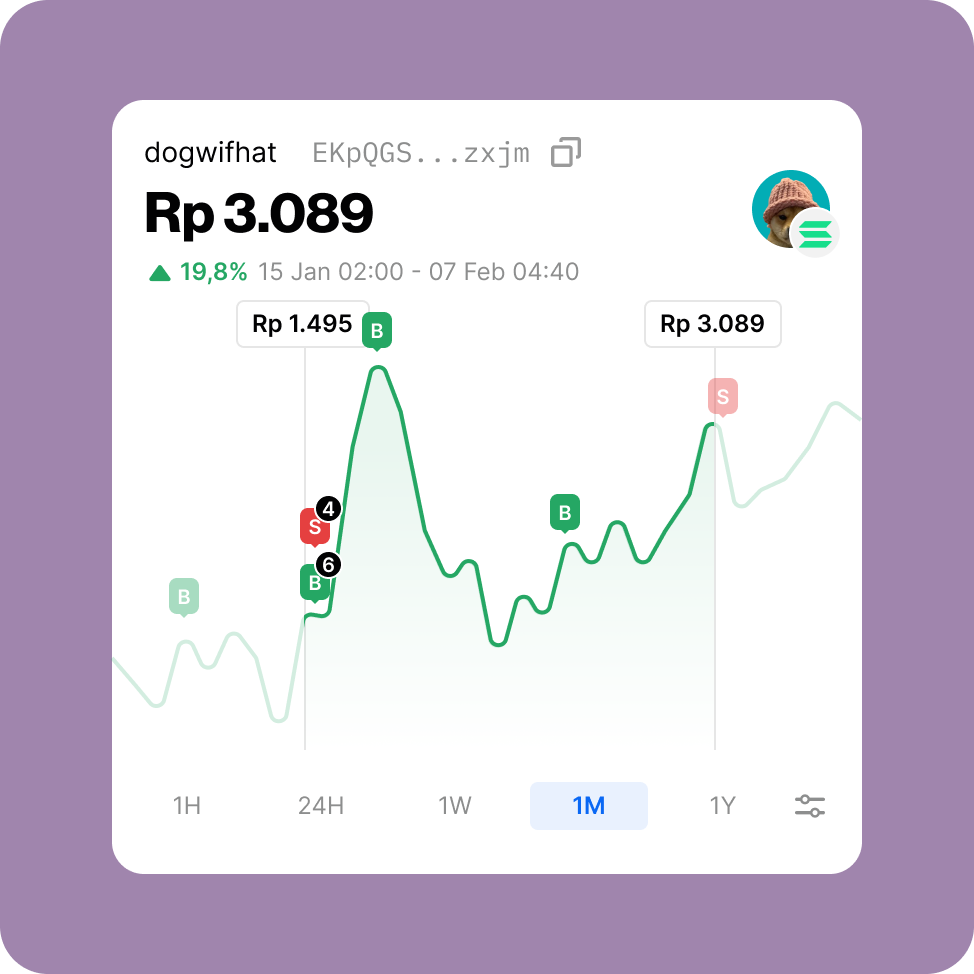
Price action leads the page, followed by market cap, volume, and liquidity. Buy and sell markers add personal context by showing where each transaction happened on the chart.
Outcome
Token Radar exceeded its adoption target within the first month and became a meaningful source of traffic into Swap. While the detailed metrics remain confidential, the feature contributed positively to conversion and showed the value of combining discovery and execution.
Reflection
Effective crypto experiences are not about providing more data. They are about surfacing the right information at the right moment.
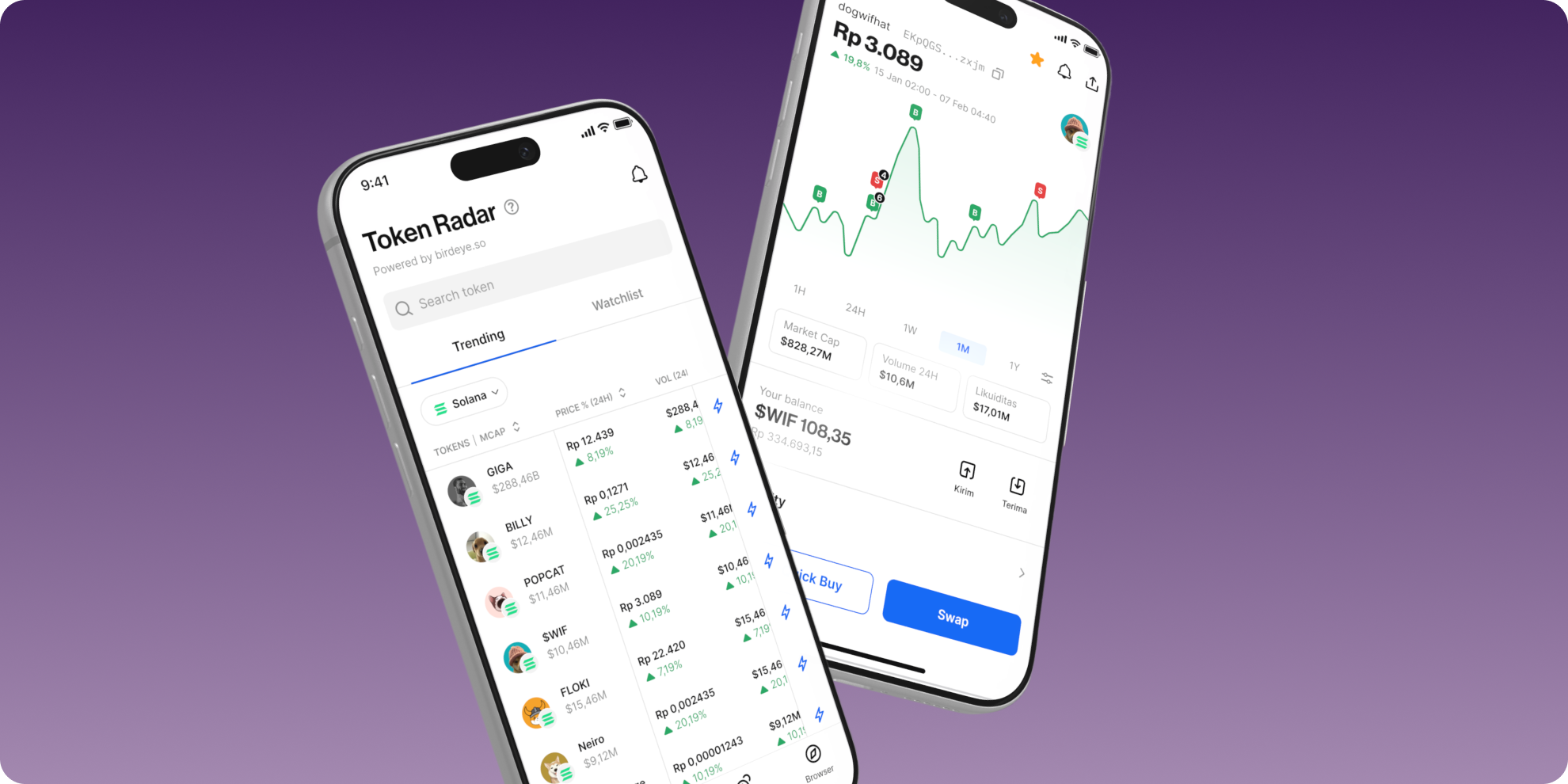
Discovery was happening outside Pintu. Token Radar created a direct path from discovery to evaluation to swap, helping traders uncover opportunities without leaving the Pintu ecosystem.
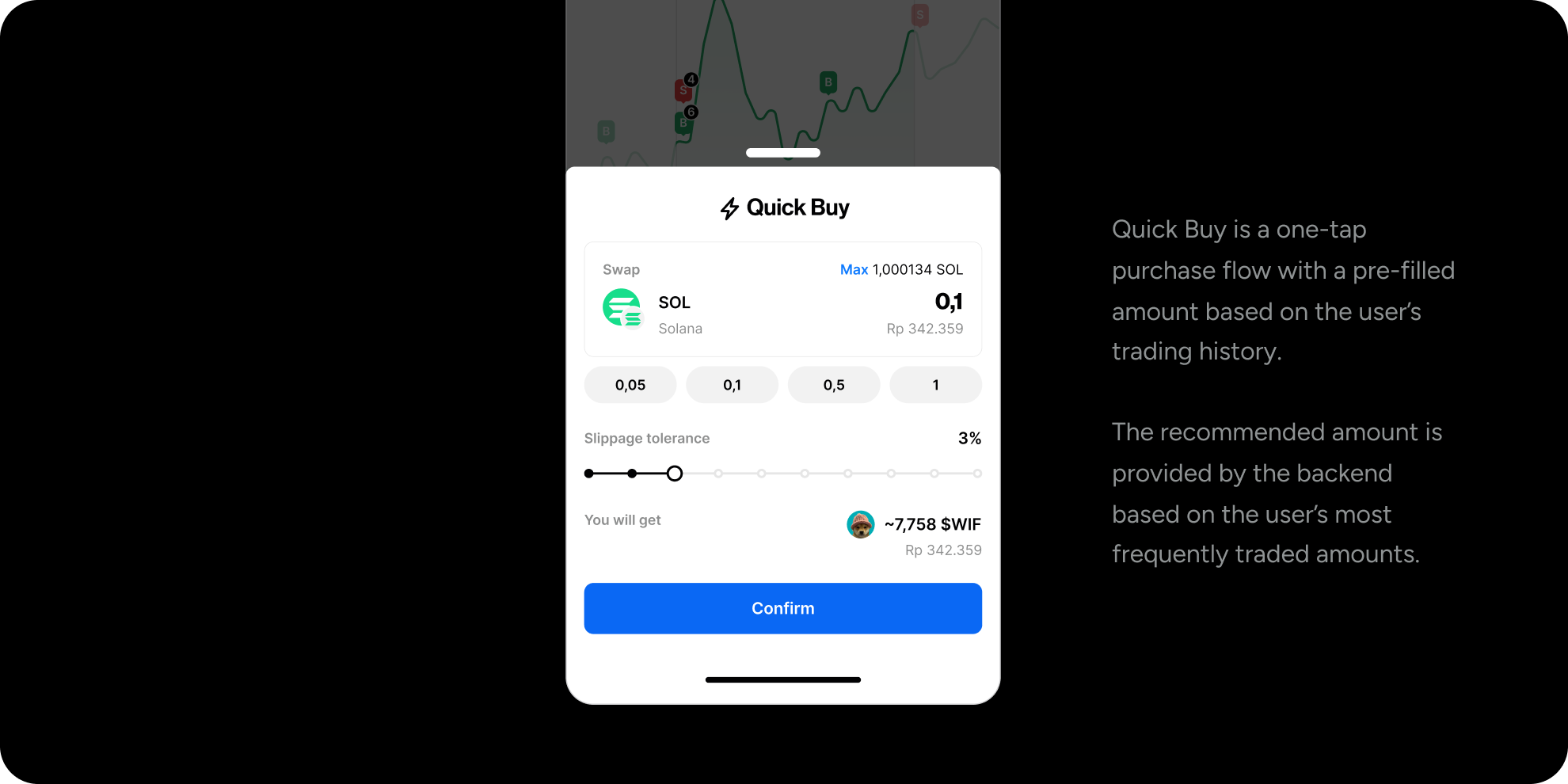
Token discovery moves fast. Users might discover a newly minted token, buy it, and sell it just minutes later. But the existing journey required them to copy a token address and paste it into their wallet, adding friction at a moment when speed matters.
So we asked: What information is essential for making a trade? What’s the minimum users need to confidently decide whether to buy a token?
We found that only a few key signals really mattered. These became the foundation of Token Radar—simplifying a complex market into the information traders need to evaluate opportunities and act quickly.
UI/UX Research
UI/UX Design
Design System
Swap conversions up +35%
Around 40% of all swaps comes from Token Radar
Token’s variety that users swapped increased by 125%
(Not quantified) Increased number of Pintu Web3 screenshots from the Telegram community
Across multiple rounds of qualitative interviews, we spent 20+ hours understanding what information traders need before buying a token. The research helped identify the signals that make users feel confident enough to move from discovery to action.
TL;DR
User don’t use token radar as primary data for trading, it’s a secondary data. They rely more on social cues, especially if it’s trending on social media. From 20 web3 users, only 2 users utilize maximum potential of the token radar. For most users, it comes to 5 main information that they check.
The lost opportunity is that once user spotted the token, they buy instantly from their browser. If they have to copy the token address and search on the swap on Pintu app, the momentum would be lost.
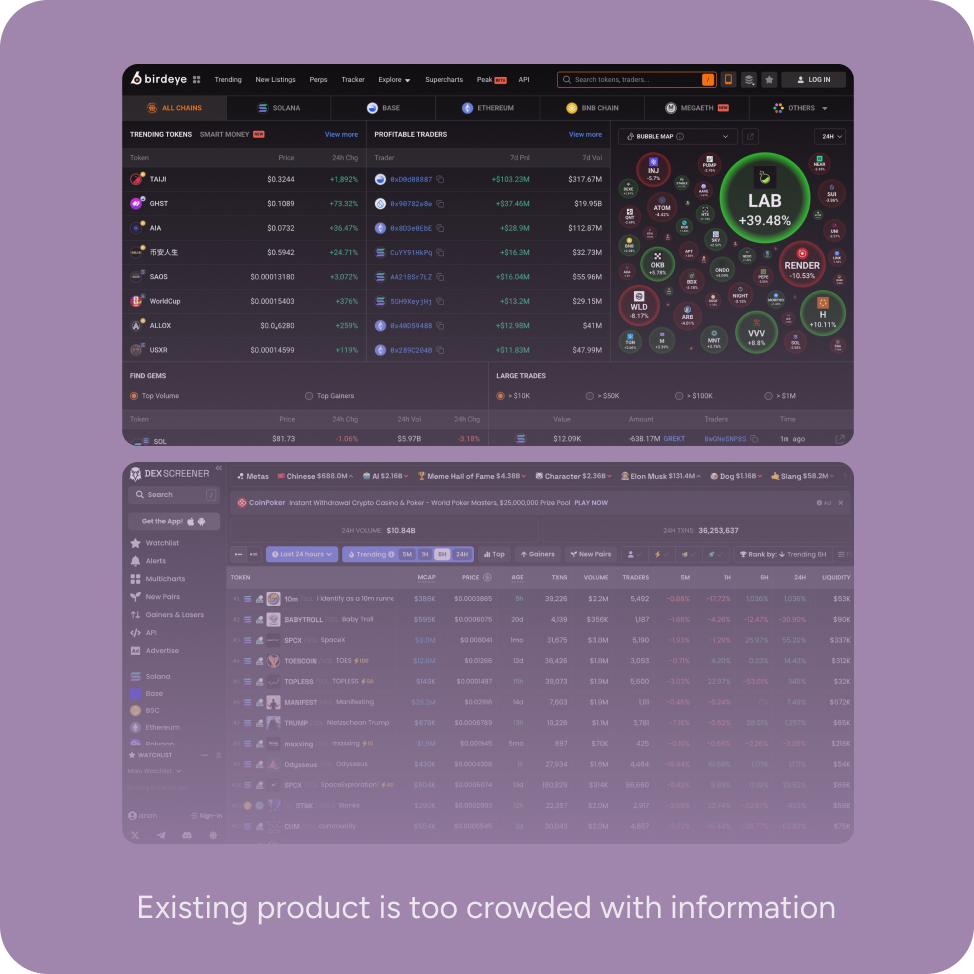
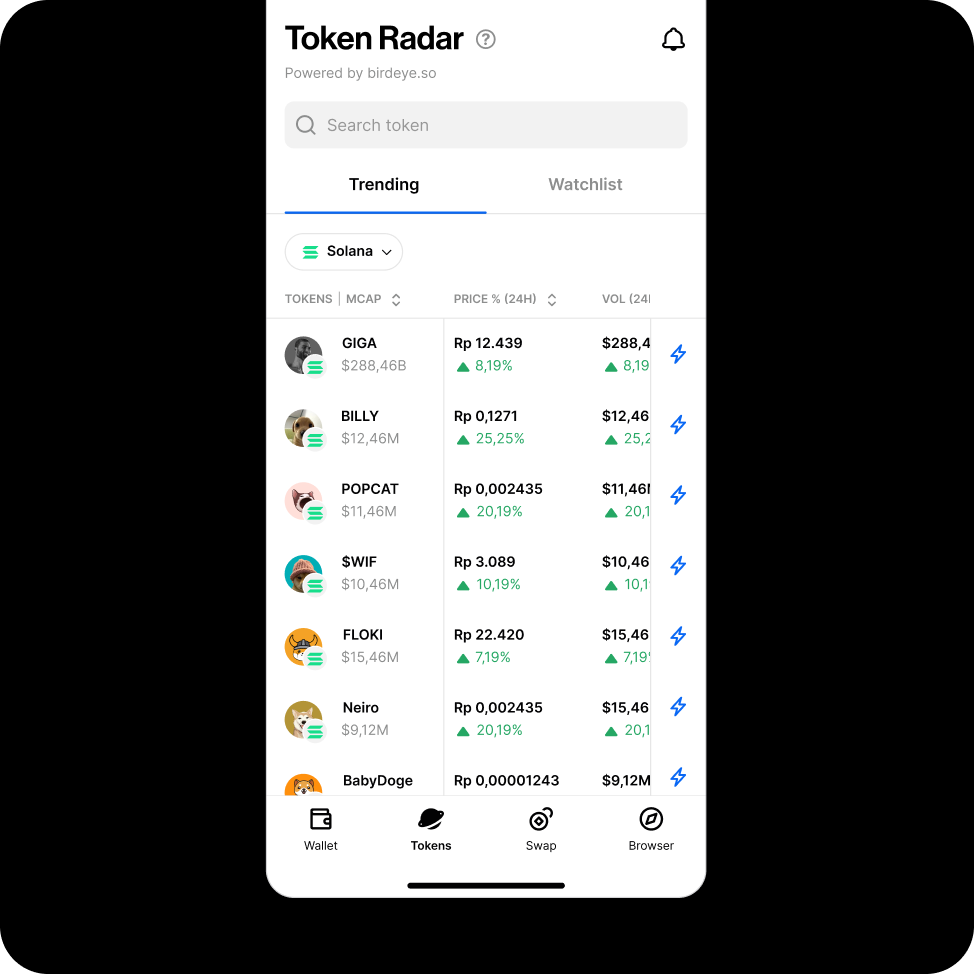
Once a trader opens a token, the detail view brings price movement, trading activity, and key market information into one focused place. The chart supports a closer read of momentum, while personal buy and sell markers help users understand their own position in relation to the market.
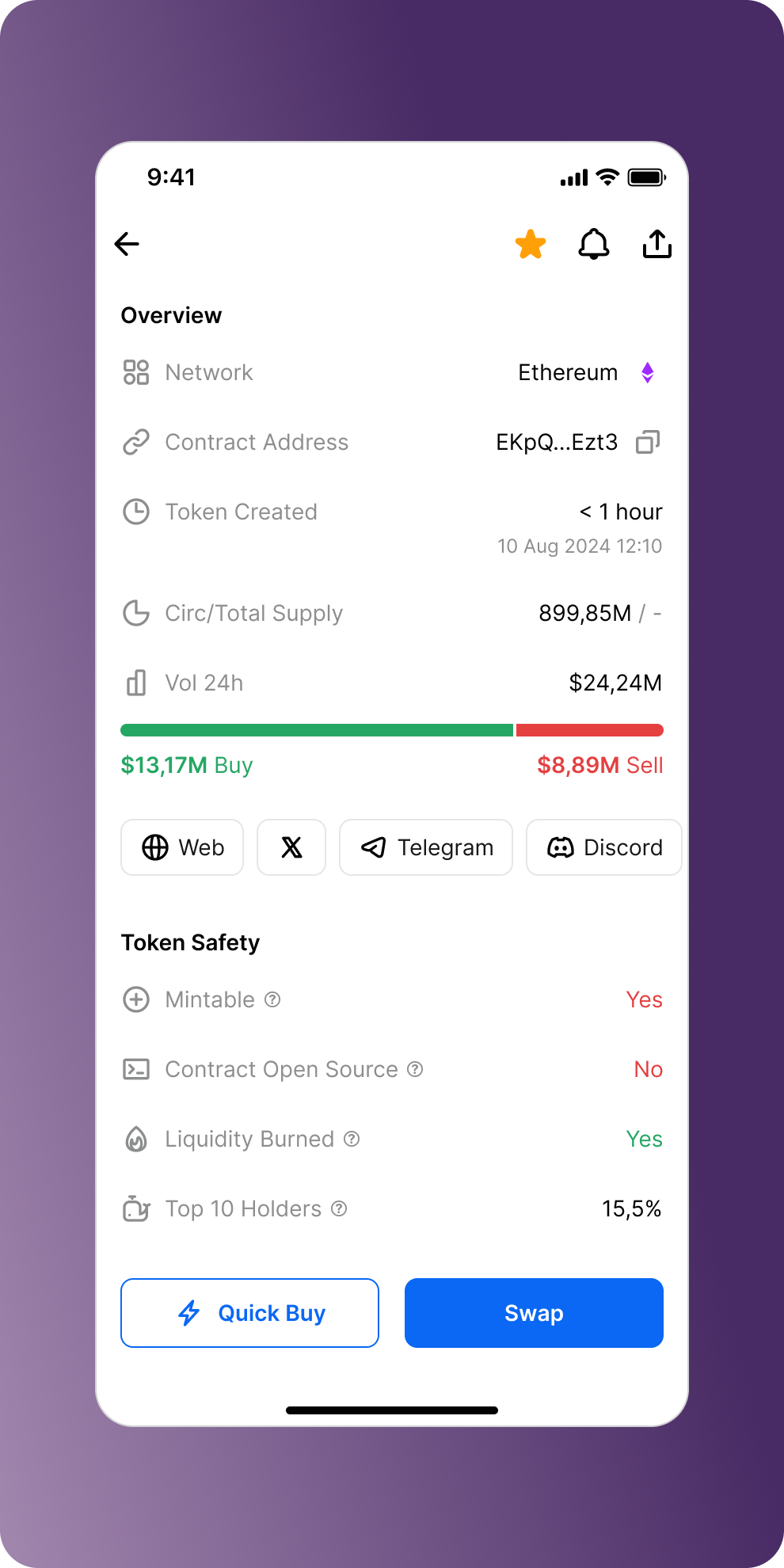
For newer or more volatile tokens, safety context needs to be visible at the moment it affects a decision. I designed the risk and market information to stay accessible without turning the core experience into a wall of warnings.
The goal was not to remove risk—it was to give users the context needed to make a more informed choice.
Although Pintu Web3 has been sunset, the project provided valuable lessons in designing for a highly dynamic and information-dense domain. One key takeaway was that effective crypto experiences are not only about providing more data, but about showing just enough data at the right moment.